Why Your OKRs Aren't Driving the Outcomes You Expected
Clayton Coetzee
20 May, 2026


Most organisations have a strategy. Fewer have a clear view of whether their teams are actually working towards it.
It’s a scenario that plays out constantly. Leadership spends time setting ambitious goals at the start of the quarter. Those goals get shared, nodded at, and filed somewhere. Teams get on with their work. And by the time the quarterly review rolls around, the conversation becomes a retrospective rather than a checkpoint. What went wrong? Why weren’t we updated sooner? How did this connect to what we said mattered?
The work wasn’t the problem. The visibility was.
The gap between setting goals and tracking them
Research from Asana’s Anatomy of Work report, which surveyed over 9,600 people across different businesses, found that organisations with clearly defined goals are significantly better prepared to meet customer expectations and more likely to gain a competitive advantage. The intent is there. The gap is almost always in the execution.
Goals that live in slide decks don’t drive outcomes. They need to be connected to the work, visible to the people doing it, and updated as things actually progress. Without that, even well-written OKRs become wallpaper.
Where OKRs tend to fall apart
OKRs, when done well, are one of the most effective frameworks for aligning teams around outcomes rather than activity. The objective sets the direction. The key results define how you’ll know you’ve got there. The methodology shifts the focus from what your team is doing to what they’re achieving.
The problem is that most organisations get stuck at the writing stage. A few patterns tend to show up again and again.
- Key results that describe activity rather than progress (“conduct training” versus “train 100% of employees with an 80% pass rate by end of Q2”)
- Goals that are set once and never revisited
- No regular rhythm for checking in and adjusting course
- And no single place where goals and work actually live together
The organisations that get this right treat OKRs as a living part of how teams work, not a planning exercise. That means building them at multiple levels, from company-wide objectives down to team and individual contributions, and making sure each layer connects clearly to the next. It means tracking progress in a way that reflects what’s actually happening on the ground. And it means checking in regularly with a simple question: are we still heading in the right direction?
What changes when strategy and execution are actually connected
When goals are connected directly to work, something shifts. Progress rolls up automatically. A completed milestone updates a key result. A key result moving forward updates the objective. Leaders get real-time visibility without having to chase status reports. Teams can see how their daily work contributes to something bigger, which turns out to be one of the most motivating things you can offer people.
It also changes how leaders respond when things go off track. Instead of finding out at the end of a quarter, they can see it early and ask better questions. Not just “why is this behind?” but “are we focusing on the right things? Do we need to shift resourcing? Is there a dependency nobody’s flagged?”
That kind of visibility doesn’t just improve goal tracking. It improves decision-making across the board.
Want to go deeper?
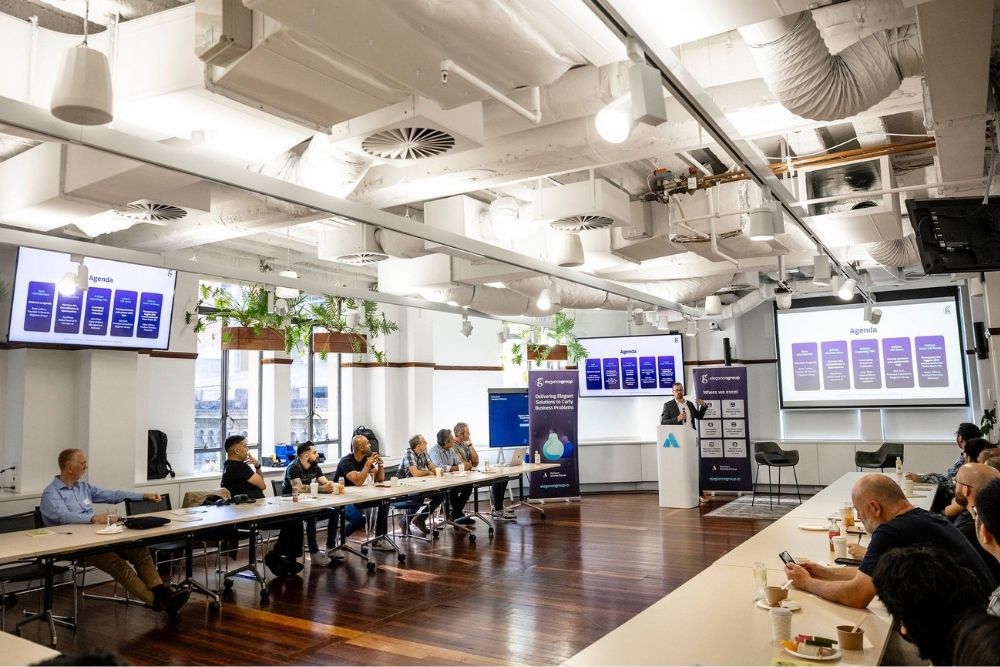
On 17 June, Elegance Group and Asana are hosting a live session to dig into exactly this: what it takes to connect day-to-day work to organisational objectives, and what actually changes when you do.
You’ll hear from Clayton Coetzee, Senior Consultant and Team Lead at Elegance Group, who works with some of New Zealand’s leading organisations on this exact challenge. Joining him is Brandon Huang, Solutions Engineer at Asana, who brings a rare ground-level view of where visibility breaks down and what good looks like when strategy and execution are genuinely aligned.
Brandon will also be running a separate hands-on demo for anyone who wants to see Asana’s goal management and OKR features up close. Let us know when you register and we’ll keep you posted on the details.
Come ready to ask questions. Leave with something you can actually use.
Recent Posts
Atlassian Is Putting AI and Automation on a Meter: Here's What's Changing and What To Do About It

Atlassian's 27 August Outage: How to Claim Your Service Credit