Reducing Cost and Complexity: Key Takeaways from Our Panel
Darren Celliers
11 May, 2026

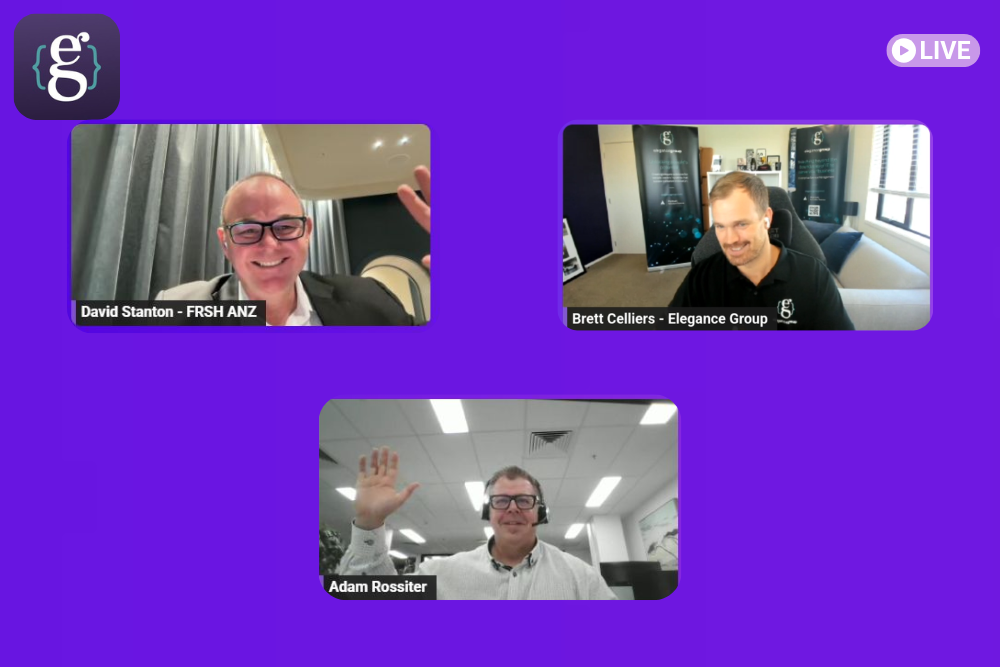
On May 7, we hosted a panel conversation focused on one of the most common problems we hear from IT and operations leaders across ANZ: service management platforms that were meant to reduce complexity have quietly become a source of it.
No slides. No demos. Just a candid discussion between Brett Celliers (Elegance Group), David Stanton (Freshworks, formerly seven years at ServiceNow), and Adam Rossiter, ICT Service Delivery Manager at Opal HealthCare, who has led a real-world platform transition from the inside.
Fresh research from Freshworks framed the conversation: organisations lose an average of 7% of annual revenue to complexity, and employees burn close to a full working day every week navigating fragmented systems. The question the panel dug into was: what does it actually take to do something about it?
Here are the key themes from the session.
1. The cost of staying put is higher than most organisations realise
David Stanton was direct about what he sees across the market. Legacy investment creates a kind of institutional inertia; organisations grind through ageing platforms rather than confront the cost of changing them. Budget pressure, internal politics, and the perceived risk of migration all contribute.
“It’s not uncommon to see other customers suffering in silence. When you spend a lot of money on IT programs and you’ve got that legacy investment, you just kind of grind through it and extend the useful economic life.” — David Stanton, Freshworks
The research puts a number on that silence. And for organisations still waiting for the right moment to act, the panel’s consistent message was that the cost of doing nothing is already accumulating, you just can’t see it on the invoice.
2. Switching platforms won’t fix a complexity problem on its own
One of the more useful points from the discussion was a challenge to the assumption that a platform change solves the underlying problem.
“If we just use that as the catalyst for change, you’re just going to end up having the same problems on your new modern service management tool. You’re going to have the same poor workflows, the same poor data. The complexity is not necessarily going to change.” — Brett Celliers, Elegance Group
Cost reduction and contract renewals are common triggers for platform reviews. But without a genuine rethink of how work flows, a new tool just recreates old problems in a shinier environment. The savings you anticipated get eaten on the back end.
3. Foundations matter more than features
Both David and Adam returned to this point independently: the decisions made in the first weeks of implementation shape everything that follows.
Opal HealthCare made a deliberate call not to migrate their old tickets into Freshservice. The clean break was a chance to rethink categorisation and configuration from scratch. In hindsight, Adam described it as one of the better decisions they made.
“Getting the foundations right for Freshservice is really important in terms of how you set it up and how you configure it.” — Adam Rossiter, Opal HealthCare
David echoed the same principle from a vendor perspective, adding that foundation decisions have a downstream impact beyond the immediate implementation.
“Those foundations that you build are going to place you better to unlock the potential of AI use cases.” — David Stanton, Freshworks
The practical implication: resist the temptation to recreate familiar legacy workflows in a new platform. Use the transition as a forcing function to examine what was actually working versus what was just habit.
4. Start with the end in mind, and go back and check you got there
David outlined a pattern common to organisations that get real value from their service management investments. It starts before the project kicks off.
“Start with the end in mind. Have a thoughtful plan around what your end game is, and then focus the project goals around a higher purpose, not just cost reduction.” — David Stanton, Freshworks
And critically, it doesn’t end at go-live. He flagged a discipline most implementations skip: going back after launch to verify that what was promised was actually delivered.
“Have the discipline after go live to circle back and just do a value realisation exercise to say, did we actually deliver what we promised? Where have we exceeded expectations? Where are there gaps that we can take some learnings from?” — David Stanton, Freshworks
The benefit is more than internal. When IT can demonstrate a track record of delivery, the next conversation with the CFO looks different.
5. Service management is a business problem, not an IT problem
Perhaps the most consistent thread across the whole conversation was the expanding scope of what service management actually means in practice.
At Opal HealthCare, the platform now extends well beyond IT. Procurement, accounts payable, payroll, and the interior design team are either already on Freshservice or in the roadmap. The team has grown no larger, but is handling significantly higher ticket volume thanks to self-service, automation, and smarter configuration.
The initial expansion wasn’t without friction. Payroll and accounts payable teams were comfortable managing everything from their inboxes. There was resistance.
“Once they saw the platform and saw how it could work, they started to get a bit more interested. But speaking to them after that now, it’s just like, ‘Well, why did we wait so long?’” — Adam Rossiter, Opal HealthCare
Those same teams are now internal advocates, helping bring the next department on board. As David put it:
“IT is a function of every business, and service is fundamental to every business. So it’s not just a cost decision that we see.” — David Stanton, Freshworks
6. The best time to move was probably already
Adam Rossiter’s story is not a product pitch. It’s a practical, honest account from someone who came from a clinical background, not a traditional IT one, and built most of the platform internally. The message he left attendees with was simple.
“Just don’t wait. If you’re just stuck in a place using a legacy platform, there’s a lot of inefficiency in that.” — Adam Rossiter, Opal HealthCare
What next?
The recording is embedded below. If anything from this conversation resonated and you’d like to talk through what it could look like in your organisation, get in touch with our team. We’re happy to have a no-obligation conversation.
Recent Posts

The Jira Life Down Under: Key Takeaways from Our Session on Atlassian's Pricing Changes
What Shipped in August: Atlassian, Asana and ClickUp All Made the Same Bet